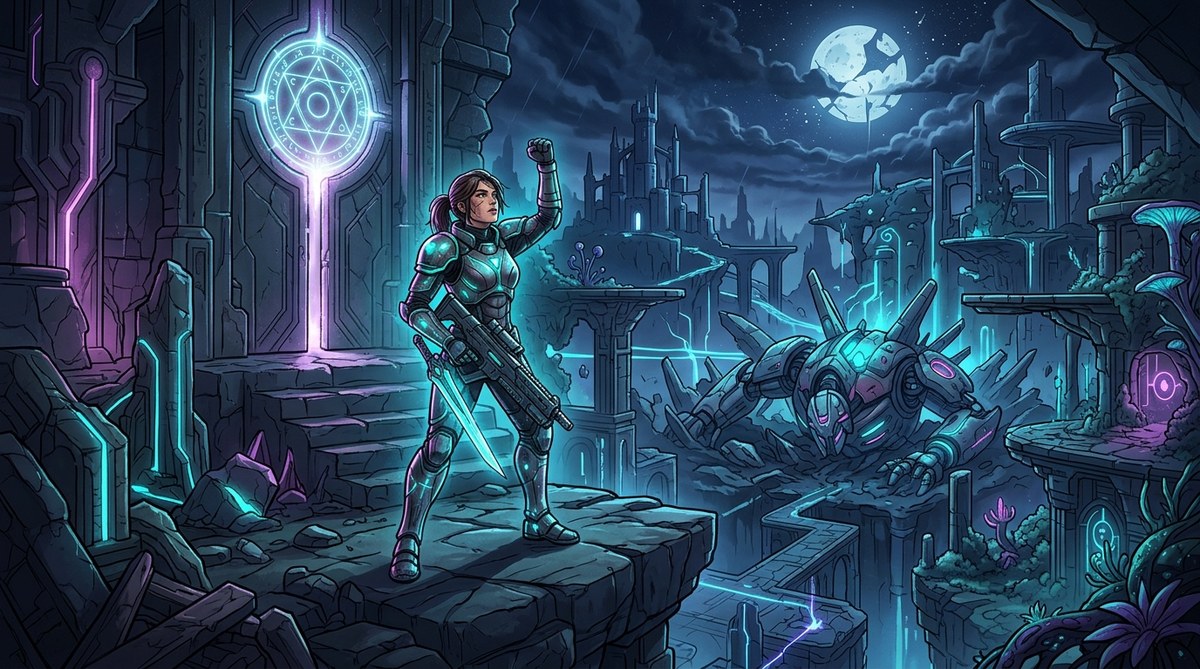
We sat down on a Saturday morning with a full pot of coffee, intending to play just the first hour of this new release. Twelve hours later, the credits rolled. Our eyes were tired, our hands were sore, and we were already planning a second playthrough. This is the kind of game that reminds you why you fell in love with the genre in the first place. It respects your intelligence, rewards your curiosity, and never wastes your time.
This new metroidvania masterpiece earns its praise through airtight level design, meaningful ability gating, and combat that feels both punishing and fair. It takes the best lessons from classics like Hollow Knight and Super Metroid while carving its own identity. If you buy only one genre title this year, make it this one.
What Sets This Game Apart from the Pack
The metroidvania genre is crowded. We get several high quality releases every year, and it takes something special to stand out. This game does not rely on gimmicks. It does not hide behind fancy visuals or a bloated map. Instead, it nails the fundamentals.
Map design that respects your time. Every dead end hides either a useful upgrade or a piece of lore. You never feel like you walked ten minutes for a joke. The world loops back on itself in satisfying ways. You will often open a shortcut and realize you have been circling a central hub for hours without noticing.
Ability gating done right. You get new movement tools at a steady pace. Each one opens up multiple paths at once, which means you always have a choice about where to go next. The game trusts you to remember where that cracked wall was or where that high ledge teased you. There is no hand holding.
Combat with weight. Enemies hit hard, but so do you. Boss fights feel like a conversation. They have clear tells, but the windows for punishment are tight. You will die, learn, adapt, and triumph. That loop never gets old.
How to Approach Your First Playthrough
If you want to get the most out of this experience, follow this simple process. It works whether you are a veteran or someone newer to the genre.
-
Ignore guides for the first six hours. Let yourself get lost. The game is designed so that even wrong turns teach you something. You will learn the map organically, and that knowledge sticks better than any walkthrough.
-
Mark your map manually. Use the in game pin system or keep a notebook nearby. When you see a barrier you cannot cross yet, mark it. You will thank yourself later when you unlock double jump or the dash ability.
-
Talk to every NPC twice. Some characters change their dialogue after you get a new ability or defeat a specific boss. You might miss a side quest or a hint if you only talk to them once.
-
Save your money for movement upgrades first. It is tempting to buy health upgrades early. Resist that urge. Movement upgrades open the map and make you harder to hit. They pay off faster.
The Moment We Knew It Was Special
About four hours in, we reached a section called the Sunken Atrium. The area is a vertical shaft filled with crumbling platforms and enemies that shoot projectiles from off screen. We died there maybe a dozen times. Each death taught us something new. A hidden alcove here. A timing trick there. When we finally reached the bottom, we found a new ability that completely changed how we navigated the rest of the game.
“The best metroidvanias make you earn every upgrade. This one makes you feel like a genius when you finally figure out how to reach it. That feeling is worth the price of admission alone.”
That moment sealed it for us. This is not a game you play. It is a game you solve.
Common Mistakes New Players Make
Even experienced players can fall into traps. Here are the most common ones we saw in forums and in our own playthrough.
| Mistake | Why It Hurts | Better Approach |
|---|---|---|
| Ignoring the bestiary | You miss enemy weaknesses and lore hints | Read each entry after you scan a new foe |
| Hoarding consumables | You never use the items that could save you | Use them freely. You will find more |
| Skipping optional rooms | You miss permanent stat boosts | Check every corner before leaving a zone |
| Rushing boss fights | You miss tells and punish windows | Spend the first 30 seconds just dodging |
| Selling upgrade materials | You lock yourself out of gear later | Keep at least 5 of every material type |
Why This Game Deserves the Masterpiece Label
We do not throw that word around lightly. A masterpiece in this genre needs to do three things well. It needs a world that begs to be explored. It needs combat that stays engaging from start to finish. And it needs to respect the player’s time and intelligence.
This game delivers on all three.
The world is hand crafted. Every screen feels like someone spent hours tweaking the platform positions and enemy placements. There is no procedural generation here. Someone designed every jump, every trap, and every secret with care.
The combat evolves. You start with a basic swing and a dodge roll. By the end, you are chaining together aerial slashes, parries, and special moves. The game introduces new enemy types right up until the final hour. You never feel like you have seen everything.
The respect for your time is the biggest win. Fast travel is available early. Checkpoints are generous without being cheap. When you die, you respawn close enough that the walk back does not feel like punishment. You get right back into the action.
How It Compares to the Genre Greats
Let us be direct. This game belongs in the same conversation as Hollow Knight, Super Metroid, and Symphony of the Night. It does not surpass all of them, but it stands beside them confidently.
- Exploration: Tighter than Hollow Knight. The map is smaller but denser.
- Combat: Faster than Super Metroid. More options, more mobility.
- Atmosphere: Darker than Symphony. The art style leans into decay and mystery.
If you loved any of those classics, you will love this. If you are newer to the genre, this is a perfect entry point. It is challenging but never cruel.
What Could Have Been Better
No game is perfect, and we want to be honest with you. The story is light. You get the broad strokes through environmental storytelling and a few NPC conversations. If you need a deep narrative with cutscenes and character arcs, this might feel thin.
The sound design is good but not great. The music fits the mood, but no track will stick in your head the way Greenpath from Hollow Knight does. It is serviceable and atmospheric, but not memorable.
The final boss is a difficulty spike. We beat it, but it took us over an hour. Some players might find that frustrating after a mostly balanced run. If you struggle, look for the optional upgrades you might have missed. They help.
Should You Buy It Right Now?
Yes. If you are reading this and you enjoy metroidvanias, stop waiting. The price is fair for the content. You get around 15 to 20 hours on a first playthrough, with plenty of reason to go back for a second run. The game runs smoothly on PC, Steam Deck, and consoles. We tested it on all three.
If you want to see our broader thoughts on the year in gaming, check out our list of 2026’s most anticipated game releases reviewed. We also put together a guide on how to spot a 10/10 game before you buy that might save you some money.
The Verdict for Fellow Metroidvania Fans
You already know if this game is for you. You read the title. You saw the screenshots. You heard the buzz. Trust your instincts. This is the real deal.
We went in skeptical. We came out believers. The game respects the genre’s history while pushing it forward. It does not try to reinvent the wheel. It just makes the wheel spin better than it has in years.
Grab your controller. Clear your schedule. Get ready to get lost. This new metroidvania masterpiece is waiting for you, and trust us, it is worth every second.
About the Author